
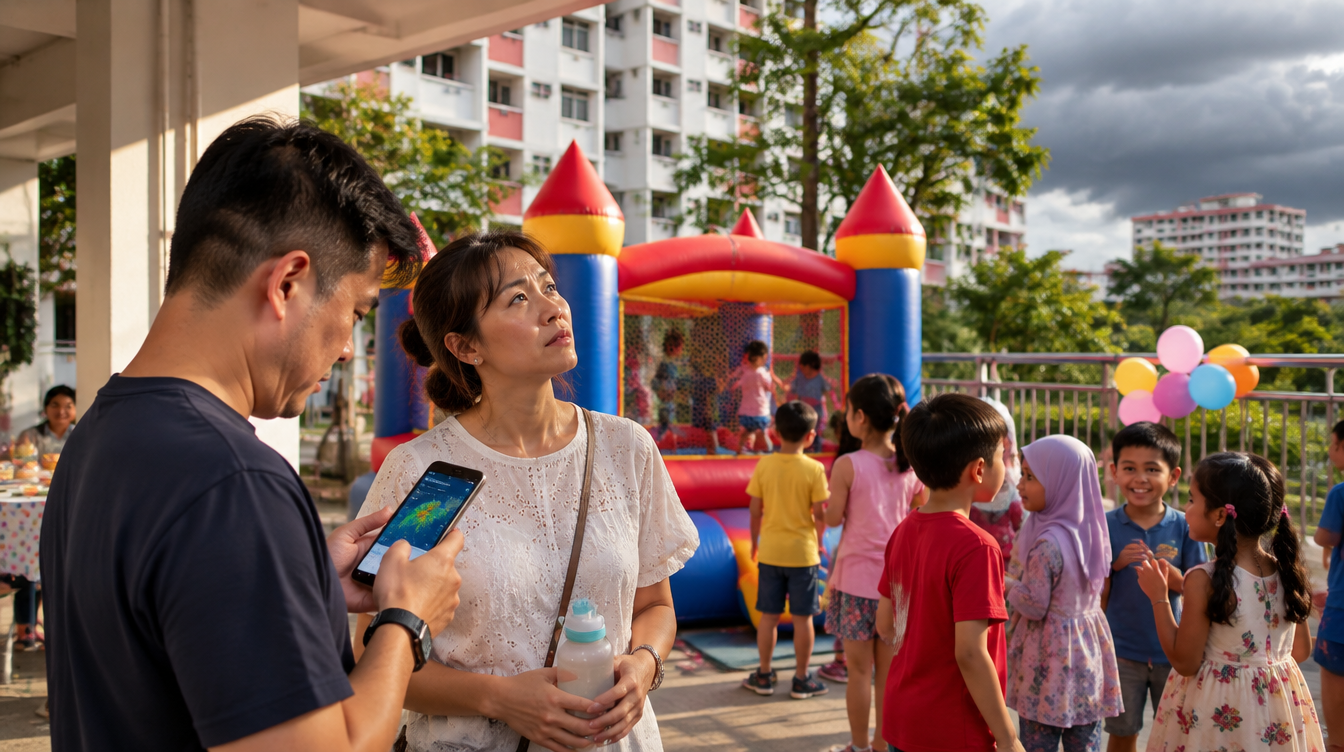
A still, sunny morning over a Singapore void deck can turn into a sudden gust and a flash on the horizon within the space of an hour, and few places feel that shift as sharply as a party with a bouncy castle in full bounce.
Most hosts plan for rain long before the big day, packing a spare gazebo or a backup indoor booking just in case. Fewer think about wind and lightning safety specifically, because an inflatable castle behaves differently from a tent or a folding table once the sky turns. A filled unit catches wind the way a sail does, and its fabric offers no shelter at all from a nearby strike, so knowing when to pause a session deserves the same forward planning as choosing the theme or the cake.
Singapore’s Weather Turns Quickly
Singapore’s position near the equator means warm, moist air is almost always on hand to build a storm, and afternoon heating over the island can turn a clear sky into a towering grey cumulonimbus cloud in under an hour. A morning that looked perfectly settled at breakfast can deliver a short, intense squall by early afternoon, complete with a sharp gust front that arrives minutes ahead of the rain itself. The same pattern that brings a welcome afternoon downpour to cool things down can just as easily bring a burst of wind strong enough to push over anything standing loose in the open, including a filled inflatable.
Many of the venues that suit a bouncy castle best, an open field, a void deck with no walls on one side, a school’s outdoor court, offer little protection from that kind of sudden change. A setup that felt perfectly sheltered at ten in the morning can be standing in the open by early afternoon, which is exactly when Singapore’s build-up storms tend to arrive.
Why a Filled Castle Behaves Like a Sail
A bouncy castle is a large, lightweight structure with a lot of surface area and comparatively little weight holding it down, which is precisely the combination that makes wind the bigger concern of the two. Workplace safety guidance for outdoor structures in Singapore, including the WSH Council’s guidelines on adverse weather, points to the same basic principle that applies here: a sudden, strong gust puts real load on anchor points that were only ever designed for everyday handling, not a squall line. Rain soaks everyone and ends the fun for an afternoon, but a strong enough gust can genuinely shift or tilt an inflatable, which is the harder risk to spot in advance because it can arrive with almost no warning once a storm cell is close. Staff on site watch for that shift and will pause a session well before conditions reach the point of visible strain on the straps or stakes.
Reading the Signs Before and During the Event
Before the event even starts, a quick check of the forecast and a weather app such as NEA’s myENV app gives a reasonable sense of whether a storm is likely during the booked window, though Singapore’s build-up systems can still form faster than any forecast predicts.
- Clouds that darken and thicken noticeably within a short stretch of time
- A sudden shift in wind direction or a gust that feels stronger than anything earlier in the day
- Audible thunder, especially under the well-known guideline that thunder within thirty seconds of a flash means the storm has already arrived close by
- A noticeable change in how the blower sounds, or straps and stakes under visibly more strain than before
- An alert pushed through a phone’s weather app while the party is already under way
None of these signs need to appear together before action is sensible, and whoever is responsible on site, whether that is the host, a helper, or the rental team, should feel free to call a pause the moment any one of them shows up, without waiting for a second opinion.
What Pausing Actually Looks Like
The first step is always the children, not the equipment. Guide them off the castle calmly and without rushing any single child, and move the group towards a solid, enclosed shelter such as a covered corridor, a function room, or a vehicle, instead of an open-sided tent or the base of a tall tree.
The unit itself can usually stay where it is during a short pause, though a prolonged one may call for deflating it so there is less surface for the wind to catch. Nobody should be touching metal stakes, poles, or anchor points while lightning is active nearby, since metal offers no protection and can make a strike more likely to travel through a person standing close to it. A clear instruction beforehand, agreed with whoever is running the rental, saves a lot of confusion in the moment: who checks the children are all accounted for, who watches the unit, and who makes the call to resume once conditions settle.
For the rest of the day’s precautions beyond this one scenario, from supervision to footwear and loading limits, the broader steps to keep young guests safe sits alongside whatever weather plan a host puts together, and the two work together instead of replacing each other.
Getting Back to the Fun
Most pauses triggered by a passing shower or a single burst of thunder last considerably less time than hosts expect, often well under half an hour. Once the sky has genuinely cleared, not just brightened for a moment, a quick look over the unit and its anchor points is enough to confirm it is ready, and the bouncing usually picks back up before the rest of the party has even finished its drinks. A short pause rarely spoils a celebration; children tend to remember the cake and the company far more than a twenty-minute wait under shelter.
Weather that cannot be controlled is simply part of hosting outdoors in this climate, but how a host responds to it is entirely within reach, and a short, sensible pause costs far less than the alternative. If you would like help thinking through a setup that accounts for Singapore’s weather from the very start, get in touch and we can talk through what would work best for your event.