
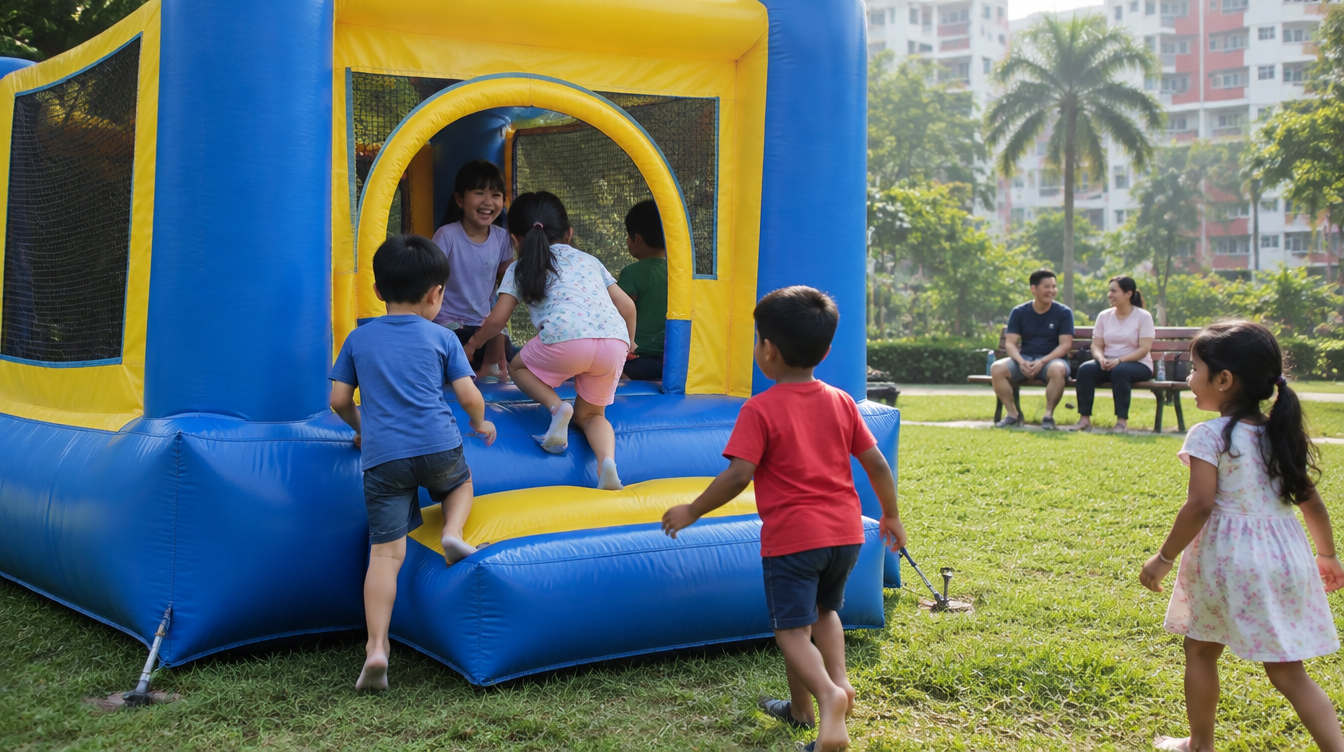
The cake is ordered, the guest list has crept past the original headcount, and the inflatable everyone agreed on is booked for Saturday morning. What almost nobody checks until the delivery team arrives is what the unit will actually be standing on: grass, concrete, interlocking tiles, or a hall floor that has never seen a peg in its life.
That detail shapes how the castle gets anchored, how dry it stays if the heavens open, and how safe it is once a dozen children start bouncing. Getting the ground surface for a bouncy castle sorted before booking day saves a scramble on the morning itself, and it is one of the few checks that takes minutes rather than hours.
Why What’s Underfoot Makes a Difference
Every bouncy castle relies on being pinned or weighted down so it does not shift when children land near the edges or a gust of wind catches the fabric. On soft ground, long stakes driven deep into turf handle that job well. On anything harder, there is nothing for a stake to grip, so the unit has to be held down with sandbags or water-filled weights instead. Skip that step, or set up on the wrong combination of surface and anchoring, and the castle can creep across the ground mid-party, which is exactly the kind of surprise nobody wants with children inside it. A sudden gust during a thundery afternoon, which is common enough in Singapore, can lift the edge of a poorly anchored unit even with children inside, so the anchoring method is as much a safety decision as a practical one.
Grass and Turf: The Classic Choice
Grass remains the easiest surface to work with, and it is why most Singapore host families default to a garden, a park field or a school lawn whenever one is available. Stakes go in cleanly, the ground gives a little extra cushioning around the base, and there is no risk of scuffing a floor that someone else has to clean afterwards.
The trade-off shows up after rain. A field that looked fine on Thursday can turn soft and waterlogged by Saturday morning, especially during Singapore’s wetter months, and staking into mud holds far less reliably than staking into firm turf. Uneven or sloped grass brings its own problem too, since a bouncy castle needs a reasonably level base to sit flat and bounce evenly.
None of this rules grass out. It simply means a quick look at the ground the day before, with a plan for extra weights if the forecast turns, keeps a grass pitch working in the host’s favour instead of against it.
Concrete, Tiles and Void Decks
Concrete courtyards, tiled driveways and the void decks under HDB blocks are where stakes cannot do their job, so the rental team switches to sandbags or water weights at every anchor point instead. The upside is a flatter, more predictable surface with no mud or tree roots to worry about. The downside is that these weights take longer to set up and need enough of them to match the unit’s size, so it helps to mention a hard surface when booking instead of leaving the crew to discover it on arrival. In humid weather, canvas sandbags left out too long can also pick up mould, so most rental teams prefer sealed water weights for repeat bookings at the same venue.
Indoor Halls and Multi-Purpose Courts
Condo function rooms, community centre halls and school multi-purpose courts bring a different set of questions. The floor is usually smooth and already protected, which is good for safety, but some venues restrict stakes and even certain weights to avoid scuffing or denting the surface. A few also cap the ceiling height a unit can clear, which affects a taller obstacle course more than a standard bouncy castle.
A short conversation with the venue’s management before confirming the rental usually settles most of this. Useful things to have on hand when that conversation happens include:
- The exact flooring material, whether vinyl, parquet, rubber matting or bare concrete
- Whether stakes, sandbags or both are permitted on that floor
- The ceiling height and any overhead fittings such as fans, sprinklers or light fixtures
- The booking window for setup and pack-down, since indoor venues often run on tighter schedules than an open field
- Any restrictions on footwear or food near the inflatable, which some management committees enforce strictly
When the Weather Changes the Plan
Singapore’s weather can shift within a single afternoon, and a dry morning is no guarantee of a dry setup. Checking the forecast on the National Environment Agency’s weather page the evening before gives the rental team a sense of whether extra anchoring or a sheltered indoor alternative is the safer call, particularly for an outdoor grass site that has already seen a few days of rain.
Getting the Site Right Before Booking Day
Surface type is really an extension of the same homework hosts already do when they check if your venue can fit the unit in the first place. Both come down to walking the space, noting what the ground is made of, and flagging anything unusual before the booking is locked in.
Photos help more than most hosts expect. A few clear shots of the intended spot, taken in daylight and showing the full width the unit will need, let the rental team spot surface issues, slopes or nearby obstacles long before delivery day instead of relying on a description given over the phone.
For bigger events with more than one inflatable, surfaces can even be mixed deliberately: a bouncy castle on a grass patch and an obstacle course on an adjoining hard court, as long as each surface gets the anchoring it needs. Working this out with the rental team ahead of time, instead of on the morning of the event, keeps everyone’s attention on the party instead of the pegs.
A bouncy castle looks much the same wherever it ends up, but the ground underneath quietly decides how it gets anchored and how smoothly the day runs once the weather turns. Whether the event is a birthday party in a garden, a school carnival on a field, or a corporate family day in a function room, the same quick check applies. A short walk around the venue and a clear note of the surface, shared with the rental team ahead of time, is usually all it takes.
To talk through what a particular site needs before the date is confirmed, get in touch and the team can help plan the setup around it.