
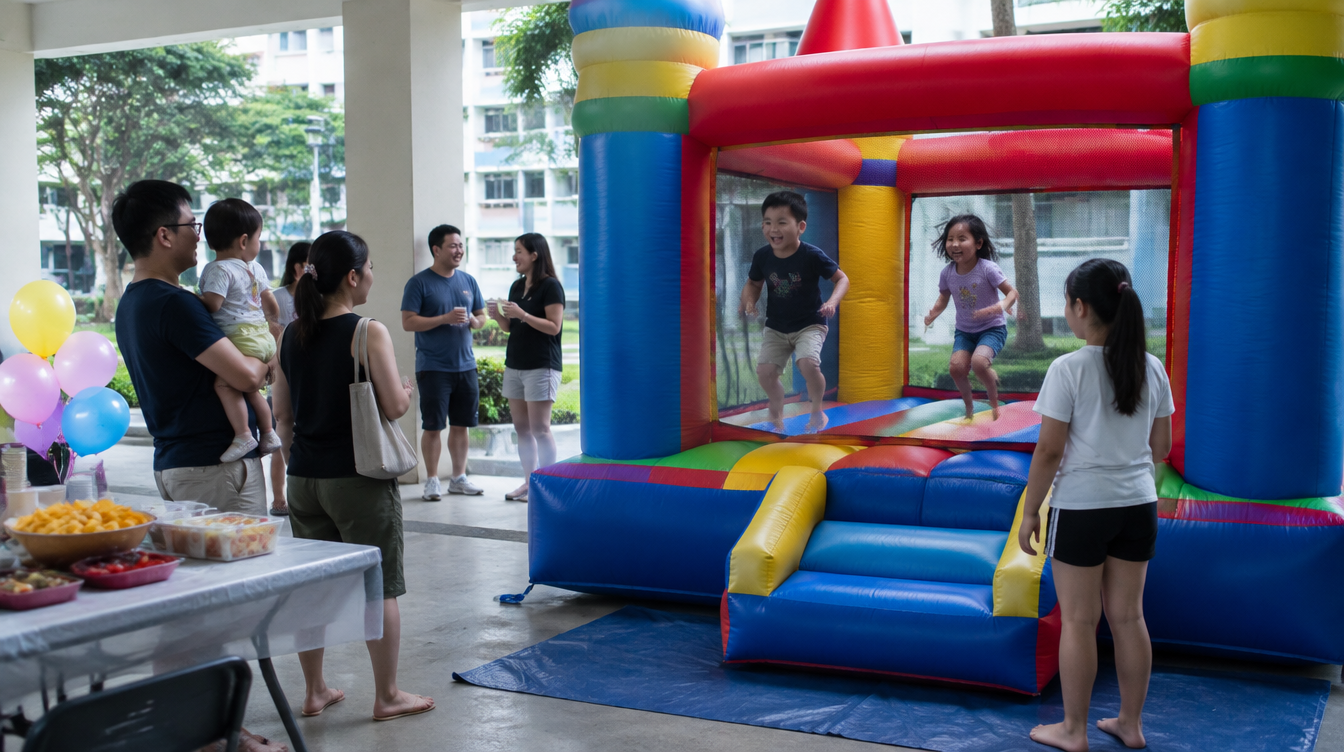
Every parent books the bounciest, most colourful inflatable they can find, then watches a three-year-old cling to the entrance while a ten-year-old tries to launch themselves over the side wall. The castle usually isn’t the problem. The age match is.
Singapore birthday parties, school carnivals and community events rarely have one tidy age group. Guest lists mix toddlers, primary schoolers and the occasional teenager who turned up with a younger sibling. Picking the right bouncy castle for each age group, rather than the biggest one on the price list, is what actually decides whether the afternoon goes smoothly. A void deck party for a five-year-old’s class and a corporate family day with staff of every age need genuinely different equipment, even if both bookings are technically “a bouncy castle for a party.”
Why Age Range Changes the Equipment You Need
A bouncy castle built for energetic eight-year-olds and one built for wobbly two-year-olds look similar in photos but behave very differently in use. Wall height, bounce surface firmness, ramp steepness and even the size of the entrance all change what feels safe and fun for a given age. A unit that delights a group of primary schoolers can genuinely overwhelm a toddler, not because anything is faulty, but because the equipment was never designed with that age in mind. Photos on a rental website rarely make this obvious, since most catalogue shots show an empty castle instead of a full one in use.
This is why a short conversation about who is actually attending should happen before anything is booked. Birth year, rough headcount per age band and whether siblings’ friends are coming along all shape the recommendation far more than the theme of the party does.
Toddlers and Preschoolers: What Works Best
For children under five, gentler and smaller is almost always the better choice. Look for a lower wall height, a soft and shallow bounce area, and a wide, low entry ramp that a wobbly toddler can climb without help. These units also tend to have a smaller footprint, which suits a void deck corner or a condo function room far better than a full-sized castle would.
Primary School Kids: More Energy, More Options
Children between roughly six and eleven have both the balance and the stamina for taller castles, obstacle elements and, outdoors, a water slide inflatable on a hot afternoon. This is also the age group that benefits most from genuinely active play: Singapore’s physical activity guidelines recommend at least sixty minutes of physical activity a day for school-aged children, and a decent bounce session covers a meaningful chunk of that.
The trade-off is that this age group gets bored of a single, simple castle faster than younger children do. If the budget allows it, an inflatable obstacle course alongside a classic castle gives this group somewhere to channel that energy once the novelty of bouncing alone wears off.
Supervision needs shift here too, just differently to toddlers. Primary schoolers need fewer physical interventions and more gentle rule-setting: no shoes inside, no food near the entrance, and a sensible cap on how many children bounce at once.
Tweens, Teens and Mixed-Age Parties
Tweens and young teenagers are often the trickiest group to plan for. Many consider a classic bouncy castle “for little kids” and gravitate instead towards an obstacle course they can race through, ideally timed against each other. Left unaddressed, this can mean older guests hovering at the edge of the party looking unimpressed while younger cousins have all the fun, which is rarely the memory a host wants from the day.
A few signs point to needing more than one inflatable, or at least a clear plan for staggering who uses it when:
- Your guest list spans more than a five-year age gap between the youngest and oldest children
- Older children have already started asking what else there is to do
- You’re combining your child’s birthday with siblings’ friends from a noticeably different age bracket
- The event is a school or community function drawing several classes or age groups at once
Matching the Inflatable to Your Venue
Age isn’t the only variable. The venue decides what’s physically possible before age even comes into it, and larger events often solve the age-mix problem by running more than one inflatable side by side instead of asking one unit to suit everybody. A school hall or open field has room to separate a toddler zone from a teen obstacle course; a single void deck bay usually doesn’t, which pushes the decision back towards one carefully chosen unit instead. For school carnivals and corporate family days, this often means multiple inflatables for bigger events instead of forcing every age group onto the same unit, with toddlers, primary schoolers and teens each given their own zone.
A Quick Planning Checklist Before You Book
Once the guest list is roughly settled, age stops being an abstract consideration and turns into a short set of practical questions.
Working through these with your rental provider ahead of time avoids most of the age-related surprises on the day itself:
- Confirm the age range and rough headcount of your guests upfront
- Ask what floor surface the inflatable needs, such as grass, a hard court, or interlocking mats on concrete
- Check the space’s height clearance against the inflatable’s full build height
- Confirm who is supervising the youngest guests near the entrance and ramp
- For a water slide inflatable, ask how weather on the day affects timing and safety
- Find out how long setup and pack-down will take around your own event schedule
Matching equipment to age group is a small planning step with an outsized effect on the day. It spares a toddler from tears at the entrance, keeps a bored tween from wandering off, and saves the host from settling arguments over whose turn is next. If you’re not sure what suits your guest list, get in touch with BouncyCastle.sg and we’ll help you work out what fits your event, your space and the ages actually on the list.